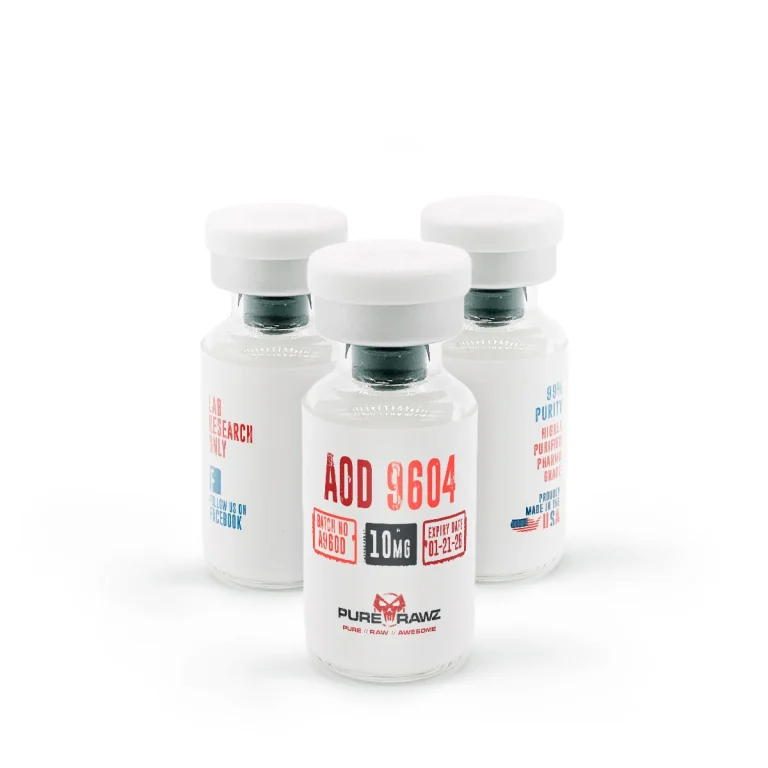
PURERAWZ AOD 9604
$95.00
⚠ Research Use Only: AOD-9604 (Anti-Obesity Drug 9604 /
Tyr-hGH Fragment 176–191) is a synthetic research peptide sold exclusively
for in-vitro laboratory and preclinical research purposes. It is not approved
by the FDA for any therapeutic or pharmaceutical indication. In December 2024,
the FDA's Pharmacy Compounding Advisory Committee determined that AOD-9604
should not be included on the 503A Bulks List for pharmaceutical compounding.
AOD-9604 is listed by WADA as a prohibited substance under S2 (Peptide
Hormones, Growth Factors, and Related Substances). This product is not a
dietary supplement and must not be self-administered. Sold strictly to
qualified researchers and scientific institutions for lawful supervised
research use only.
≥99%
HPLC Purity Certified
Dual COA
Purity + Endotoxin
Lot-Traceable
Every Batch, Every Vial
USA Shipping
1 Business Day
No Rx Required
Direct Research Purchase
Buy AOD-9604 — Lab-Verified HGH Fragment 176-191 Research Peptide
Researchers who need to buy AOD-9604 with full
independent purity documentation will find PureRawz delivers the most
rigorous research-grade standard in the HGH fragment peptide market. Our
AOD-9604 — the synthetic 16-amino acid C-terminal fragment of human growth
hormone (hGH 176–191) with N-terminal tyrosine modification — is independently
third-party tested to ≥99% purity via HPLC and mass spectrometry, ships from
our USA-based facility within 1 business day, and arrives with a dual
Certificate of Analysis covering both purity and endotoxin load. Every vial
carries a unique lot number cross-referenced to its batch-specific COA.
When you buy AOD-9604 from PureRawz, you receive research-grade documentation
that serious laboratory procurement requires — not a marketing claim, but an
independently certified, lot-traceable laboratory record.
AOD-9604 Product Specifications
- Full Name: AOD-9604 / Anti-Obesity Drug 9604 /
Tyr-hGH Fragment 176–191 - Also Known As: GH Fragment 176-191, hGH Frag 177-191,
Tyr-hGH(177-191) - Origin: Developed at Monash University, Australia
(1990s) by Professor Frank Ng; commercialized by Metabolic
Pharmaceuticals Ltd. - Peptide Sequence (16 AA):
Tyr-Leu-Arg-Ile-Val-Gln-Cys-Arg-Ser-Val-Glu-Gly-Ser-Cys-Gly-Phe - Disulfide Bridge: Cys7–Cys15 intramolecular
(essential for cyclic conformation and lipolytic activity) - N-Terminal Modification: Tyrosine addition replacing
native phenylalanine — enhances enzymatic degradation resistance and
increases lipolytic potency vs unmodified fragment - Molecular Formula: C₇₈H₁₂₃N₂₃O₂₃S₂
- Molecular Weight: 1,815.12 g/mol
- CAS Number: 386264-39-7
- PubChem CID: 16131447
- Purity: ≥99% (HPLC verified)
- Verification Methods: HPLC + Mass Spectrometry
- Endotoxin Testing: LAL assay — separate COA
issued per batch - Form: Lyophilized powder
- Available Sizes: 5mg and 10mg per vial
- Plasma Half-Life: ~30 minutes (subcutaneous
administration in preclinical models) - Storage: −20°C (long-term); 2–8°C (short-term,
up to 4 weeks); protect from light - Lot Number: Unique per batch — matched to COA
- Shipping Origin: USA — 1 business day processing
Dual COA Certification — PureRawz Documentation Standard
Every batch of AOD-9604 from PureRawz undergoes independent
third-party laboratory analysis before release. We issue two separate
Certificates of Analysis per production lot — a documentation level that
exceeds what most research peptide suppliers provide:
- Purity COA — HPLC and mass spectrometry confirming
≥99% peptide purity, sequence identity of the 16-amino acid
Tyr-hGH(177-191) fragment, and presence of the Cys7–Cys15 disulfide
bridge confirmed through mass-based structural analysis. Unique
lot-number specific — tied to the exact batch in your vial. - Endotoxin COA — LAL (Limulus Amebocyte Lysate)
assay documenting LPS endotoxin levels per batch. Critical for any
in-vivo adipose tissue or metabolic research model — LPS contamination
at sub-threshold concentrations directly activates TLR4-mediated
inflammatory signaling in adipocytes, confounding β3-AR lipolysis
pathway readouts and invalidating metabolic endpoint data.
Every COA is permanently linked to the lot number on your vial. PureRawz
does not recycle, share, or issue undated certificates across production
runs. Researchers receive batch-specific documentation they can attach to
institutional procurement records with full chain-of-custody integrity.
What Is AOD-9604? Research Background and Molecular Mechanism
AOD-9604 — formally Anti-Obesity Drug 9604 — is a synthetic hexadecapeptide
derived from the C-terminal region (amino acids 176–191) of human growth hormone
(hGH), with an additional tyrosine residue at the N-terminus replacing the
native phenylalanine. This modification, developed during research at Monash
University in the 1990s under Professor Frank Ng, enhances resistance to
enzymatic degradation and strengthens lipolytic receptor activity compared to
the unmodified GH fragment. AOD-9604 was subsequently developed commercially
by Metabolic Pharmaceuticals Ltd. (Australia) as a candidate anti-obesity
pharmaceutical, progressing through one of the most extensive clinical trial
programs ever conducted for a research peptide.
Molecular Mechanism — β3-Adrenergic Receptor Pathway
AOD-9604 exerts its primary preclinical effects through a well-characterized
receptor-independent and receptor-dependent signaling cascade focused on adipose
tissue lipid handling:
- β3-Adrenergic receptor (β3-AR) upregulation: Research
by Ng et al. (2000) demonstrated that AOD-9604 increases β3-AR mRNA
expression in adipose tissue — restoring receptor density in obese animal
models toward levels observed in lean controls, enhancing adipocyte
sensitivity to lipolytic stimuli - Hormone-sensitive lipase (HSL) activation: Elevated
intracellular cAMP downstream of β3-AR activation phosphorylates and
activates hormone-sensitive lipase, triggering hydrolysis of stored
triglycerides into free fatty acids and glycerol for energy mobilization - Lipoprotein lipase (LPL) inhibition: AOD-9604
concurrently inhibits lipoprotein lipase activity in adipose tissue,
reducing uptake and re-esterification of circulating triglycerides —
shifting the adipocyte metabolic balance from lipid storage toward
lipid mobilization - IGF-1 independence: Unlike full-length hGH, AOD-9604
does not activate the hGH receptor and does not elevate serum IGF-1 —
making it a selective tool for studying isolated lipolytic signaling
without the confounding growth-promoting, mitogenic, and insulin-resistance
effects of complete GH administration - Receptor-independent pathway: Heffernan et al. (2001)
demonstrated that AOD-9604 retains fat oxidation activity in β3-AR
knockout mice — confirming a secondary receptor-independent mechanism
involving enhanced energy expenditure and fat oxidation beyond the
β3-AR pathway alone
AOD-9604 Clinical Trial History — The Most Tested Research Peptide
AOD-9604 holds a distinction almost unique in the research peptide
landscape: it has been evaluated in formal Phase I and Phase II human
clinical trials — providing a safety and tolerability data set across
approximately 900 participants that most research peptides cannot match.
Understanding this clinical history is essential context for researchers
designing preclinical protocols.
Complete Clinical Development Timeline
- 1990s — Preclinical origin: Research at Monash
University, Australia, establishes that the C-terminal fragment of hGH
retains lipolytic activity independent of the growth-promoting N-terminal
region. Rodent studies demonstrate significant fat reduction in obese
Zucker rats and ob/ob mice at 250 µg/kg/day dosing without IGF-1
elevation or glucose disruption - 2001–2003 — Phase I and Phase IIa trials: Metabolic
Pharmaceuticals Ltd. initiates human safety and early efficacy trials.
A 12-week Phase IIa randomized controlled trial in approximately 300
participants demonstrates statistically significant weight reduction
(2.6 kg vs 0.8 kg placebo at 1 mg/day oral dosing). Safety profile
described as indistinguishable from placebo — no significant changes
in IGF-1, glucose tolerance, insulin sensitivity, or hormone panels
across six separate controlled trials - 2003–2007 — Phase IIb OPTIONS trial: A 24-week
Phase IIb study enrolling 536 subjects across multiple countries at
doses up to 1 mg/day oral administration fails to replicate the Phase
IIa weight loss signal at statistical significance. Metabolic
Pharmaceuticals discontinues clinical development in March 2007 — not
due to safety concerns, but due to insufficient efficacy to justify
continued pharmaceutical development investment - 2013–2014 — GRAS submissions: AOD-9604 safety data
from the clinical program is submitted to the FDA for Generally
Recognized as Safe (GRAS) designation review as a food ingredient,
based on the accumulated human safety database - 2021 — FDA GRAS status granted: AOD-9604 receives
FDA GRAS (Generally Recognized as Safe) designation for use as a food
ingredient — a formal safety determination based on review of the
complete clinical trial safety dataset. This is a meaningful regulatory
milestone that reflects the compound's established human safety
profile, though it does not constitute therapeutic approval - Post-2010 — Renewed research interest: The research
community identifies new preclinical applications for AOD-9604 beyond
obesity — particularly in cartilage regeneration, joint biology, and
osteoarthritis models, driven by unexpected findings in rabbit knee
studies showing enhanced chondrocyte activity and cartilage matrix
repair when AOD-9604 is combined with hyaluronic acid - December 2024 — FDA 503A ruling: The FDA's Pharmacy
Compounding Advisory Committee recommends against including AOD-9604
on the 503A Bulks List, meaning it should not be compounded at
traditional compounding pharmacies. PureRawz sells AOD-9604 strictly
as a research compound — not as a compounded pharmaceutical — and this
ruling does not affect the lawful purchase of AOD-9604 for legitimate
laboratory research purposes
AOD-9604 vs GH Fragment 176-191 — Critical Research Distinction
These terms are frequently conflated in research literature and supplier
listings, but they represent subtly different compounds with important
experimental implications. Researchers must distinguish between them to
ensure experimental reproducibility and accurate sourcing.
Comparison Table — AOD-9604 vs GH Fragment 176-191
| Parameter | AOD-9604 | GH Fragment 176-191 (unmodified) |
|---|---|---|
| N-Terminal | Tyrosine added (Tyr) | Native Phe — no modification |
| CAS Number | 386264-39-7 | 66004-57-7 |
| Molecular Weight | 1,815.12 g/mol | 1,817.12 g/mol |
| Enzymatic Stability | Enhanced — Tyr modification protects N-terminus |
Lower — susceptible to N-terminal peptidase cleavage |
| Lipolytic Potency | Higher per unit dose | Lower — reduced β3-AR activation |
| Clinical Trial Data | Phase I + Phase IIb (~900 subjects) |
Preclinical only — no human trial program |
| FDA GRAS Status | ✓ Granted 2021 | ✗ Not applicable |
| Research Recommendation |
Preferred for most lipolysis and metabolic research protocols |
Use only when studying unmodified fragment-specific effects |
Sourcing alert: Always verify CAS 386264-39-7 on your
COA when ordering AOD-9604. Some suppliers list "GH Fragment 176-191"
and "AOD-9604" interchangeably — they are not identical compounds. Mass
spectrometry confirmation of the correct molecular weight (1,815.12 g/mol)
is the definitive verification that you have received the tyrosine-modified
AOD-9604 and not the unmodified fragment.
How to Reconstitute AOD-9604 — Research Protocol with Disulfide
Bridge Handling Guidelines
AOD-9604 has specific reconstitution requirements that distinguish it
from linear research peptides. The intramolecular disulfide bridge between
Cys7 and Cys15 creates a cyclic conformation that is sensitive to reducing
agents and oxidative conditions. Correct handling preserves this structural
feature — which is directly responsible for the peptide's lipolytic
receptor activity.
Required Materials
- AOD-9604 lyophilized vial (≥99% purity — lot number verified
against COA before proceeding) - Bacteriostatic water (0.9% benzyl alcohol) — preferred for
multi-use vials - Sterile water for injection — for single-use preparations only
- Do NOT use acetic acid solutions — acidic
reconstitution solvents can disrupt the Cys7–Cys15 disulfide bridge
by promoting disulfide bond reduction in the presence of trace
reducing agents - Insulin syringe — 0.3mL or 0.5mL with 29–31 gauge needle
- 70% isopropyl alcohol swabs
- Refrigerated storage (2–8°C) ready immediately post-reconstitution
Step-by-Step AOD-9604 Reconstitution Procedure
- Verify lot number and disulfide bridge integrity:
Before opening, cross-reference the lot number on the vial label
with your Purity COA. Confirm the COA includes mass spectrometry
identity confirmation showing the molecular weight of 1,815.12 g/mol
— a deviation from this value may indicate disulfide bridge reduction
(open-chain form, MW ~1,817.12 g/mol) or incorrect sequence. AOD-9604
lyophilized powder appears white to off-white. - Equilibrate to room temperature: Allow the sealed
vial to warm from −20°C to room temperature for 15–20 minutes before
introducing solvent. Cold vials risk condensation on the powder,
which can introduce moisture variability and affect reconstitution
consistency. - Swab the septum: Clean the rubber stopper with
a 70% isopropyl alcohol swab. Air-dry for 10–15 seconds before
needle insertion. - Calculate your working concentration:
- 5mg vial + 2mL bacteriostatic water =
2.5mg/mL (2,500 mcg/mL) - 5mg vial + 2.5mL bacteriostatic water =
2mg/mL (2,000 mcg/mL) - 10mg vial + 4mL bacteriostatic water =
2.5mg/mL (2,500 mcg/mL) - 10mg vial + 5mL bacteriostatic water =
2mg/mL (2,000 mcg/mL)
- 5mg vial + 2mL bacteriostatic water =
- Inject solvent slowly against the glass wall —
never directly onto the powder: The disulfide bridge in
AOD-9604 makes it more susceptible to mechanical shear stress
than linear peptides. Direct high-velocity injection onto the
lyophilized cake can partially denature the cyclic structure.
Always direct the solvent stream at a slow, steady angle against
the inner glass wall and allow it to run down passively onto
the powder beneath. - Gentle swirl — never shake or vortex: Swirling
introduces air-liquid interface shear forces that can cause
disulfide shuffling in cysteine-containing peptides. Gently rotate
the vial until the powder dissolves — typically 60–90 seconds.
The solution should appear clear and colourless. - Inspect and discard if necessary: Any turbidity,
precipitation, or yellow coloration indicates degradation,
oxidative damage to the disulfide bridge, or contamination.
Do not use compromised solution in assays — disulfide-reduced
AOD-9604 loses β3-AR binding affinity and will produce
confounded lipolysis data. - Label with lot number and reconstitution date.
Refrigerate immediately:- Bacteriostatic water solutions: stable for
21–28 days at 2–8°C - Sterile water solutions: use within 24 hours
- Never freeze reconstituted AOD-9604 — freeze-thaw cycles
promote disulfide bond shuffling and peptide aggregation,
reducing both purity and receptor activity in downstream assays
- Bacteriostatic water solutions: stable for
AOD-9604 Preclinical Research Protocols — Published Parameters
Disclaimer: The following information is drawn
exclusively from published peer-reviewed preclinical and in-vitro research
literature. It is provided for scientific reference only for qualified
researchers designing laboratory protocols. PureRawz does not provide
medical advice, dosing guidance for human use, or therapeutic
recommendations of any kind.
In-Vivo Preclinical Dosing Parameters
- Rodent obesity models (ob/ob mice, Zucker rats):
250 µg/kg/day subcutaneous administration most commonly reported
in chronic lipolysis and body composition studies; 14–28 day
protocol duration most frequent in published literature - Acute lipolysis studies (rat models): Single-dose
IV administration at 0.5–1 mg/kg used in acute fat oxidation kinetics
studies measuring plasma free fatty acids and glycerol release
within 2-hour post-injection windows - Cartilage repair models (rabbit knee): Direct
intra-articular injection protocols reported in osteoarthritis
models — 100–500 µg per joint weekly for 4–8 weeks, often in
combination with hyaluronic acid as a delivery vehicle - Administration routes studied: Subcutaneous (most
common in chronic metabolic studies), intraperitoneal (acute
mechanistic studies), intra-articular (cartilage models), and oral
(Phase IIb clinical trials at 1–20 mg/day — demonstrating oral
bioavailability not typical for most peptides)
Secondary Research Application — Cartilage Regeneration
- Preclinical rabbit models of collagenase-induced knee osteoarthritis
have shown that AOD-9604 + hyaluronic acid combination significantly
outperforms either agent alone in cartilage repair scoring, lameness
reduction, and chondrocyte activity markers - Proposed mechanism involves growth factor modulation — specifically
TGF-β and BMP-2 pathway activity in chondrocytes — independent of
the β3-AR lipolytic pathway, suggesting AOD-9604 has distinct
mechanisms in different tissue types - The Australian Therapeutic Goods Administration (TGA) has approved
AOD-9604 for use in cartilage repair formulations — providing a
second formal regulatory approval pathway distinct from the US
GRAS designation and supporting this secondary research application
with regulatory endorsement
Why Buy AOD-9604 from PureRawz — Research Source Comparison
| Quality Factor | PureRawz | Typical Competitor |
|---|---|---|
| Purity Grade | ≥99% HPLC + MS verified | ≥98% or unspecified |
| Disulfide Bridge Verified | ✓ MS confirmed Cys7–Cys15 | Assumed — not COA documented |
| COA Documentation | Dual: Purity + Endotoxin | Single purity report only |
| CAS Number Verified | 386264-39-7 on every COA | Often unlisted or uses fragment CAS |
| Lot Traceability | ✓ Unique lot — every vial | Often generic or undated |
| Testing Laboratory | Accredited independent third-party |
In-house or unverified |
| Shipping Origin | USA — 1 business day | Variable / international risk |
| Rx Required | ✗ No — direct research purchase | Varies by supplier type |
Related Research Peptides — Frequently Studied Alongside AOD-9604
Researchers working with AOD-9604 in metabolic, body composition,
and tissue repair research frequently incorporate the following
compounds. All PureRawz peptides are independently third-party tested,
lot-verified, ≥99% pure, and ship from our USA facility:
-
CJC-1295 (GHRH Analogue)
— A long-acting GHRH analogue studied for GH axis
stimulation and IGF-1 elevation. Frequently co-administered with
AOD-9604 in body composition research protocols because CJC-1295
works on the GH secretion axis while AOD-9604 targets peripheral
adipose tissue lipolysis directly — complementary, non-overlapping
mechanisms. Third-party tested ≥99%, dual COA, USA shipping.
Buy CJC-1295 → -
Ipamorelin (GHS-R1a Agonist)
— A selective GH secretagogue studied alongside
AOD-9604 in multi-peptide metabolic protocols. Ipamorelin stimulates
pulsatile GH release through the ghrelin receptor; AOD-9604 targets
adipocyte β3-AR. Together they cover both central GH axis stimulation
and peripheral lipolysis signaling in research designs.
Buy Ipamorelin → -
BPC-157 (Body Protection Compound-157)
— A 15-amino acid pentadecapeptide frequently
investigated in joint biology and tissue repair studies. Commonly
combined with AOD-9604 in cartilage and connective tissue research
protocols given AOD-9604's documented cartilage regeneration activity
in rabbit osteoarthritis models. Lab-verified ≥99%, dual COA.
Buy BPC-157 → -
TB-500 (Thymosin Beta-4)
— A 43-amino acid actin-sequestering peptide studied in
tissue repair, cellular migration, and extracellular matrix remodeling
research. Investigated alongside AOD-9604 in joint and connective
tissue research programs. Third-party tested ≥99%, lot-traceable,
USA shipping.
Buy TB-500 →
Frequently Asked Questions — AOD-9604 Research Peptide
1. What purity does PureRawz guarantee for AOD-9604?
PureRawz AOD-9604 is certified at ≥99% purity via independent
third-party HPLC and mass spectrometry analysis per production batch.
The COA confirms the 16-amino acid Tyr-hGH(177-191) sequence, the
correct molecular weight of 1,815.12 g/mol, presence of the Cys7–Cys15
disulfide bridge, and the CAS number 386264-39-7 — distinguishing the
tyrosine-modified AOD-9604 from the unmodified GH Fragment 176-191
(CAS 66004-57-7). Each lot receives its own unique COA — never a
shared or recycled certificate.
2. What is the difference between AOD-9604 and GH Fragment 176-191?
AOD-9604 (CAS 386264-39-7) is a modified version of GH Fragment
176-191 (CAS 66004-57-7) with an additional tyrosine residue at the
N-terminus replacing the native phenylalanine. This tyrosine modification
enhances resistance to N-terminal peptidase degradation in plasma and
increases lipolytic potency per unit dose compared to the unmodified
fragment. AOD-9604 has also undergone Phase I and Phase IIb human
clinical trials totaling approximately 900 participants — a clinical
data set that the unmodified GH Fragment 176-191 does not have. Always
verify CAS 386264-39-7 and molecular weight 1,815.12 g/mol in your
COA to confirm you have received AOD-9604 and not the unmodified
fragment.
3. Does PureRawz provide an endotoxin COA for AOD-9604?
Yes. Every batch of AOD-9604 from PureRawz is accompanied by a
dedicated endotoxin Certificate of Analysis generated via LAL (Limulus
Amebocyte Lysate) assay from an accredited independent laboratory —
separate from and additional to the purity COA. For in-vivo adipose
tissue and metabolic research, endotoxin documentation is experimentally
critical: LPS contamination at sub-threshold concentrations activates
TLR4-mediated inflammatory signaling in adipocytes, artificially altering
lipolysis pathway readouts and confounding β3-AR activation data in
ways that can invalidate entire experimental runs. Most research peptide
suppliers do not provide separate endotoxin COA documentation. PureRawz
provides both as standard.
4. What does the Cys7–Cys15 disulfide bridge mean for
reconstitution?
AOD-9604 contains an intramolecular disulfide bond between cysteine
residues at positions 7 and 15, creating a cyclic conformation
responsible for its β3-adrenergic receptor binding geometry and lipolytic
activity. This structural feature requires specific reconstitution
handling: do not use acidic co-solvents (acetic acid) which can promote
disulfide reduction in the presence of trace reducing agents; do not
shake or vortex the reconstituted vial — gentle swirling only — to
prevent air-liquid interface shear that promotes disulfide shuffling;
never freeze reconstituted solution as freeze-thaw cycling promotes
disulfide bond disruption. Always use bacteriostatic water or sterile
water as your solvent. If your reconstituted solution appears turbid
or yellow, the disulfide bridge may be compromised — discard and
prepare fresh.
5. What is AOD-9604's FDA GRAS status and what does it mean?
In 2021, AOD-9604 received FDA Generally Recognized as Safe (GRAS)
designation for use as a food ingredient, based on a comprehensive
review of the compound's clinical trial safety database accumulated
across six human trials. This means the FDA has formally determined
AOD-9604 is safe for oral consumption at the studied doses — a
meaningful regulatory milestone that most research peptides do not have.
Importantly, GRAS status is a food ingredient safety designation,
not a drug approval — it does not authorize AOD-9604 for therapeutic,
pharmaceutical, or compounding use, and it does not change its status
as a research-use-only compound when sold by research peptide suppliers
like PureRawz.
6. What happened with the December 2024 FDA 503A ruling on
AOD-9604?
In December 2024, the FDA's Pharmacy Compounding Advisory Committee
(PCAC) recommended that AOD-9604 should not be included on the 503A
Bulks List — the list of bulk drug substances that traditional
compounding pharmacies are permitted to use. This ruling affects the
ability of compounding pharmacies to prepare and dispense AOD-9604
as a prescription compounded medication. It does not affect the lawful
purchase of AOD-9604 as a research compound for in-vitro laboratory
and preclinical research purposes. PureRawz sells AOD-9604 strictly
as a research chemical — not as a compounded pharmaceutical — and this
ruling has no impact on legitimate research procurement from
PureRawz.
7. Has AOD-9604 been tested in human clinical trials?
Yes — AOD-9604 has an unusually extensive human clinical trial
history for a research peptide. Metabolic Pharmaceuticals Ltd.
conducted six randomized, double-blind, placebo-controlled clinical
trials enrolling approximately 900 participants between 2001 and 2007.
Safety results across all trials showed a profile indistinguishable
from placebo — no significant effects on IGF-1, glucose tolerance,
insulin sensitivity, blood pressure, or hormonal panels. A 12-week
Phase IIa trial showed statistically significant weight reduction
(2.6 kg vs 0.8 kg placebo). A 24-week Phase IIb trial of 536 subjects
did not replicate the weight loss signal at statistical significance,
leading to discontinuation of pharmaceutical development in 2007 —
not due to safety concerns but due to insufficient commercial
efficacy. This clinical dataset is the foundation for AOD-9604's 2021
FDA GRAS designation.
8. How should AOD-9604 be stored before and after reconstitution?
Lyophilized AOD-9604 powder should be stored at −20°C for long-term
stability (up to 24 months) or at 2–8°C for short-term use up to 4 weeks.
Protect from light at all storage temperatures. After reconstitution
with bacteriostatic water: store at 2–8°C, use within 21–28 days, and
protect from light. After reconstitution with sterile water: use within
24 hours. Never freeze reconstituted AOD-9604 solution — freeze-thaw
cycling disrupts the Cys7–Cys15 disulfide bridge and promotes peptide
aggregation, reducing both analytical purity and biological activity in
downstream assays. Always label reconstituted vials with the date and
lot number and refrigerate immediately after preparation.
9. Can AOD-9604 be combined with other peptides in research
protocols?
Yes — AOD-9604 is frequently investigated in multi-peptide research
protocols given its mechanistically distinct, non-overlapping pathways.
The most commonly studied combinations in published and institutional
research include: AOD-9604 + CJC-1295 or Ipamorelin (GH secretagogue
protocols — AOD-9604 addresses peripheral lipolysis while GHRH analogues
stimulate central GH axis signaling); AOD-9604 + BPC-157 (joint and
tissue repair research — complementary extracellular matrix and
cartilage regeneration mechanisms); AOD-9604 + Hyaluronic acid
(intra-articular cartilage repair models — combination shown in rabbit
studies to significantly outperform either agent alone). Because
AOD-9604 does not affect IGF-1 or GH receptor signaling, it does not
create the interaction concerns associated with full-length HGH in
combination protocols.
10. Is AOD-9604 legal to purchase for research in the USA?
Yes. AOD-9604 is legal to purchase for legitimate in-vitro laboratory
and preclinical research purposes in the United States. It is not a
DEA-scheduled controlled substance. It holds FDA GRAS status as a food
ingredient (2021). The December 2024 FDA ruling affects compounding
pharmacy dispensing only — not research compound procurement.
AOD-9604 is listed by WADA as a prohibited substance under S2 for
competitive athletes. PureRawz sells AOD-9604 exclusively for
lawful laboratory research use. Buyers confirm at checkout that the
product is intended for research purposes only and are solely
responsible for compliance with all applicable regulations governing
research compound use in their jurisdiction.
⚠ Legal Disclaimer: AOD-9604 (Tyr-hGH Fragment
176–191 / CAS 386264-39-7) is sold by PureRawz exclusively for
in-vitro laboratory research and preclinical study purposes. It is not
approved by the FDA for any therapeutic, pharmaceutical, or clinical
indication. In December 2024, the FDA's Pharmacy Compounding Advisory
Committee determined AOD-9604 should not be included on the 503A Bulks
List for compounding pharmacies. AOD-9604 holds FDA GRAS status as a
food ingredient (2021) and is listed by WADA as a prohibited substance
under S2. It is not a dietary supplement, must not be self-administered,
and is not intended for human or veterinary use outside of a licensed
medical context. By purchasing, the buyer confirms they are a qualified
researcher or scientific institution procuring for lawful, supervised
research use only. PureRawz bears no liability for any use outside its
intended research application. All page content is for educational and
scientific reference only and does not constitute medical advice.
Purerawz AOD 9604
Purerawz AOD 9604 is a well-known research peptide commonly explored for metabolism-focused studies, fat loss research, and advanced laboratory applications.
Browse related Purerawz peptides and trusted research references below.
Related Products
- Buy AOD 9604 – metabolism and peptide research
- Buy MK-677 – growth hormone support research
- Buy Sermorelin Online – peptide support studies
- Sermorelin for Sale – advanced growth research
- Buy IGF-1 LR3 – performance and recovery research
- Buy MOTS-C – mitochondrial peptide studies
Research References
-
PubMed Research Database
– scientific studies and published research -
National Center for Biotechnology Information (NCBI)
– biomedical and research resources -
U.S. Food and Drug Administration
– regulatory and compliance reference
Reviews
There are no reviews yet.