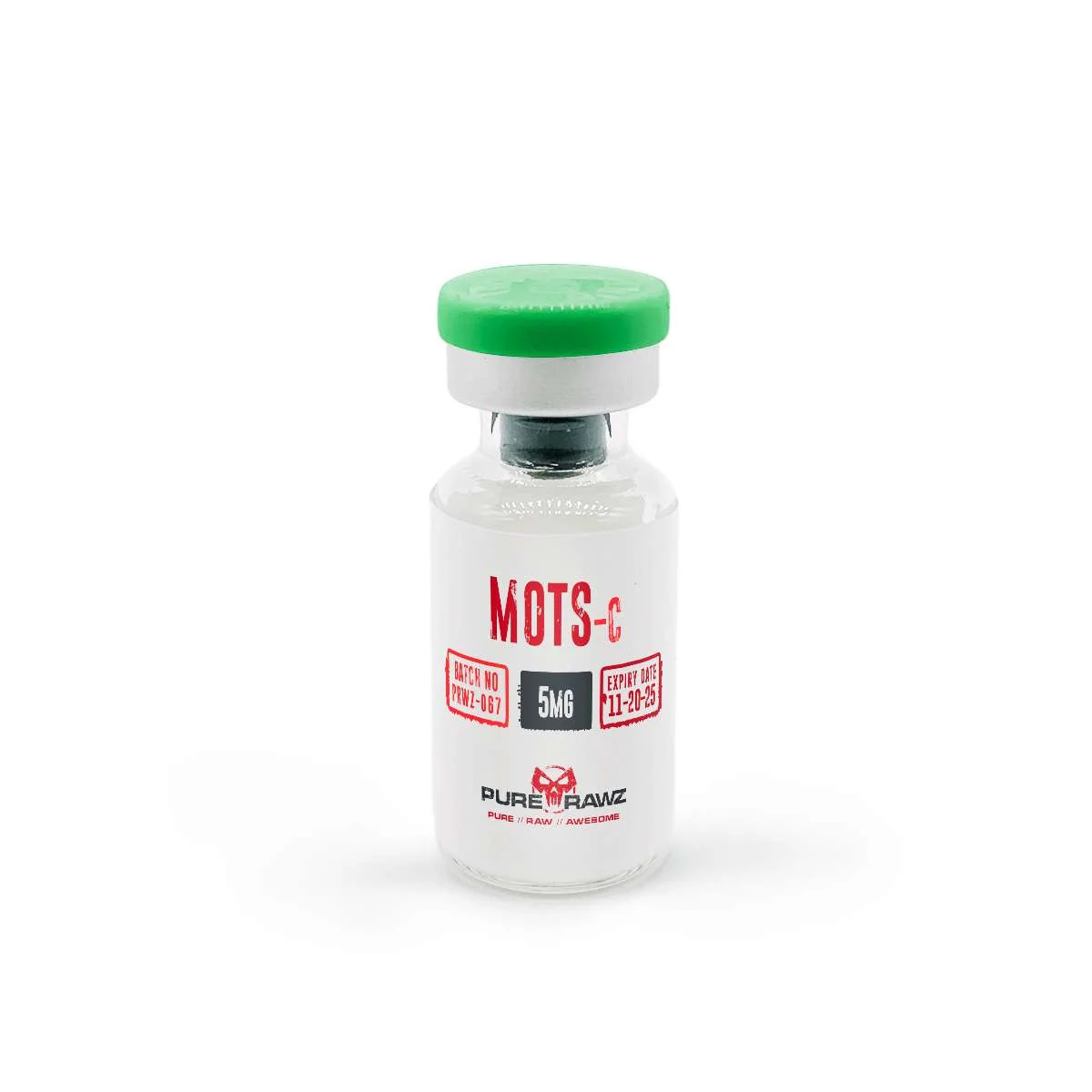
MOTS-c
Price range: $74.00 through $396.54
Earn 74 – 397 points upon purchasing this product.
✅ 99% Purity – Third-Party Tested
🚚 Free U.S. Shipping on Orders $100+
🇺🇸 Proudly Made in the USA
⚡ Fast & Reliable Shipping
🔒 Secure Checkout Guaranteed
⚠ Research Use Only: MOTS-c (Mitochondrial Open
Reading Frame of the 12S rRNA-c) is a synthetic research peptide sold
exclusively for in-vitro laboratory and preclinical research purposes.
It is not approved by the FDA for any therapeutic indication and is
listed by the FDA among bulk drug substances that may present safety
risks for compounding. MOTS-c is prohibited by WADA under S4.4.1
(Activators of AMP-activated protein kinase). This product must not be
self-administered. Sold strictly to qualified researchers and scientific
institutions for lawful supervised research use only.
≥99%
HPLC + MS Verified
Full 16 AA
Complete Sequence
Dual COA
Purity + Endotoxin
USA Shipping
1 Business Day
Lot-Traceable
Every Batch
⚠ Critical Sourcing Alert — Full Sequence vs Truncated
Fragment: Some suppliers ranking for "buy MOTS-c" supply
the MOTS-c (1-12) truncated fragment
(MRWQEMGYIFYP — 12 amino acids) rather than the
full biologically active MOTS-c
(MRWQEMGYIFYPRKLR — 16 amino acids). The C-terminal RKLR sequence
(positions 13–16) is essential for nuclear translocation under
metabolic stress and full AMPK pathway activation. Always verify
you are ordering the complete 16 amino acid sequence.
PureRawz supplies exclusively the full 16 AA human
MOTS-c — confirmed by MS at MW 2,174.6 g/mol.
Buy MOTS-c — Full 16 AA Mitochondrial-Derived Peptide, USA Source
Researchers who need to buy MOTS-c with complete
sequence verification and fully documented quality credentials will find
PureRawz delivers the highest research-grade standard in the
mitochondrial-derived peptide market. Our MOTS-c (Mitochondrial Open
Reading Frame of the 12S rRNA-c) is the complete 16-amino acid human
peptide sequence MRWQEMGYIFYPRKLR — not the truncated (1-12) fragment —
independently third-party tested to ≥99% purity via HPLC and mass
spectrometry, shipped from our USA-based facility within 1 business day,
and backed by a dual Certificate of Analysis covering both purity and
endotoxin load. Every vial carries a unique lot number cross-referenced
to its batch-specific COA. When you buy MOTS-c from
PureRawz, you receive the complete, research-active peptide sequence
your AMPK pathway experiments require — not a fragment that lacks the
nuclear translocation domain.
MOTS-c Product Specifications
- Full Name: Mitochondrial Open Reading Frame of
the 12S rRNA-c (MOTS-c) - Classification: Mitochondrial-Derived Peptide
(MDP) — encoded by mitochondrial DNA 12S rRNA short open reading
frame (sORF) - Discovery: First described 2015, Dr. Pinchas
Cohen and collaborators, University of Southern California — Cell
Metabolism, PMID: 25738459 - Sequence (Human, Full 16 AA):
Met-Arg-Trp-Gln-Glu-Met-Gly-Tyr-Ile-Phe-Tyr-Pro-Arg-Lys-Leu-Arg
(MRWQEMGYIFYPRKLR) - Sequence (Rat, for comparison):
MKRKEMGYIFFSQRTLRNPL (20 amino acids — significantly different
from human sequence; rat sequence products are NOT appropriate
for human biology research) - PureRawz Product: Human sequence only —
MRWQEMGYIFYPRKLR - Molecular Formula: C₁₀₁H₁₅₂N₂₈O₂₂S₂
- Molecular Weight: 2,174.6 g/mol
- CAS Number: 1627580-64-6
- PubChem CID: 146675088
- Purity: ≥99% (HPLC + Mass Spectrometry verified)
- Endotoxin Testing: LAL assay — separate COA
per batch - Form: Lyophilized powder (white to off-white)
- Available Sizes: 5mg and 10mg per vial
- Half-Life (circulating, preclinical models):
~1–2 hours - Storage: −20°C (long-term); 2–8°C (short-term
up to 4 weeks); protect from light; avoid repeated freeze-thaw - Lot Number: Unique per batch — matched to dual
COA - Shipping Origin: USA — 1 business day
processing
Dual COA Certification — PureRawz Documentation Standard
Every MOTS-c batch from PureRawz is released only after independent
accredited third-party laboratory verification. We issue two separate
Certificates of Analysis per lot:
- Purity COA — HPLC and mass spectrometry
confirming ≥99% peptide purity, full 16 amino acid sequence identity
(MRWQEMGYIFYPRKLR), and correct molecular weight of 2,174.6 g/mol.
MS identity confirmation distinguishes full-length MOTS-c from the
truncated (1-12) fragment (MW ~1,520 g/mol) and from the rat sequence
variant. Lot-number specific — tied to your exact batch. - Endotoxin COA — LAL (Limulus Amebocyte Lysate)
assay documenting LPS endotoxin per batch. For AMPK pathway studies
and skeletal muscle insulin sensitivity assays — MOTS-c's primary
research contexts — LPS contamination activates TLR4-NF-κB
inflammatory signaling that independently stimulates AMPK through
inflammatory cytokine release, confounding MOTS-c-specific AMPK
activation data and producing false-positive metabolic endpoint
readings.
What Is MOTS-c? The Mitochondrial DNA Peptide That Rewrote
Biology
MOTS-c occupies a completely unique position in the research peptide
landscape — it is the only widely studied research peptide encoded by
mitochondrial DNA rather than nuclear DNA. This single fact makes MOTS-c
scientifically distinct from every other peptide in your catalog and
explains why it has generated extraordinary research interest since its
discovery in 2015.
The Discovery — A Peptide Hidden in Mitochondrial RNA
The story of MOTS-c begins with a biological surprise. For decades,
the mitochondrial 12S ribosomal RNA (12S rRNA) gene was considered
non-coding outside of its role in ribosome function. In 2015, Dr. Pinchas
Cohen's laboratory at the University of Southern California identified a
short open reading frame (sORF) within this mitochondrial 12S rRNA
sequence — a 51-nucleotide coding region that produces a 16-amino acid
peptide they named MOTS-c: Mitochondrial Open Reading Frame of the
12S rRNA-c. This discovery, published in Cell Metabolism (Lee et al.,
2015, PMID: 25738459), fundamentally expanded our understanding of
mitochondrial biology — demonstrating that the organelle previously
considered a passive energy producer is in fact an active signaling organ
communicating with the nucleus through its own peptide hormones.
The Retrograde Signaling Revolution
Before MOTS-c, it was well established that the nucleus sends
prograde signals to mitochondria — nuclear DNA encodes most
mitochondrial proteins. MOTS-c established the reverse: mitochondria
send retrograde signals to the nucleus through a peptide that can
physically translocate from cytoplasm to nucleus in response to metabolic
stress. This nucleus-mitochondria bidirectional communication system has
become one of the most active areas of aging biology research in
2025–2026 — and MOTS-c is its primary molecular tool.
MOTS-c Full Sequence vs MOTS-c (1-12) Fragment — Why It Matters
for Your Research
This is the most important sourcing distinction for any researcher
buying MOTS-c. Phoenix Peptide — currently ranking #1 for "buy MOTS-c"
searches — supplies only the MOTS-c (1-12) truncated
fragment. PureRawz supplies the complete 16 amino acid
sequence. Here is why that difference is critical:
| Parameter | Full MOTS-c (PureRawz) |
MOTS-c (1-12) Fragment (Phoenix) |
|---|---|---|
| Amino Acids | 16 AA (complete) | 12 AA (truncated) |
| Sequence | MRWQEMGYIFYPRKLR | MRWQEMGYIFYP (lacks RKLR) |
| Molecular Weight | 2,174.6 g/mol | ~1,520 g/mol |
| C-terminal RKLR domain | ✓ Present | ✗ Absent |
| Nuclear Translocation | ✓ Full stress-induced translocation |
Impaired — RKLR required for hydrophobic core interaction |
| AMPK pathway activation | ✓ Full Thr172 phosphorylation |
Reduced — truncated sequence lacks full signaling domain |
| Primary literature reference | Full sequence used in Lee et al. (2015), Reynolds et al. (2021) |
Fragment only used in selective binding studies |
| Research suitability |
Metabolic, insulin, exercise, aging, longevity research |
Receptor binding assays only |
Verification protocol: Always confirm the molecular
weight in your COA mass spectrum. Full MOTS-c = 2,174.6 g/mol. MOTS-c
(1-12) fragment = ~1,520 g/mol. Any deviation from 2,174.6 g/mol
indicates you received the truncated fragment or a degradation product,
not the research-active full-length peptide used in published AMPK and
insulin sensitivity studies.
MOTS-c Mechanism of Action — From Mitochondrial DNA to Nuclear
Gene Regulation
MOTS-c operates through a cascade of interconnected molecular events
that begins in the mitochondrial genome and — under metabolic stress —
reaches the cell nucleus to reprogram gene expression. No other peptide
in current research operates through this specific mitochondria-to-nucleus
signaling axis.
Step 1 — Folate Cycle Inhibition and AICAR Accumulation
The primary metabolic mechanism of MOTS-c was established in the
landmark 2015 Cell Metabolism paper and involves a specific biochemical
cascade:
- Folate-methionine cycle inhibition: MOTS-c
suppresses key enzymes in the folate cycle including MTR
(5-methyltetrahydrofolate-homocysteine methyltransferase) and MTRR,
reducing availability of 5-methyl-THF. This blocks the
methionine-folate cycle and its tethered de novo purine biosynthesis
pathway - AICAR accumulation (>20-fold): Inhibition of
de novo purine synthesis leads to accumulation of AICAR
(5-aminoimidazole-4-carboxamide ribonucleotide) — a purine pathway
intermediate that reaches >20-fold higher concentrations in
MOTS-c gain-of-function cell systems vs. controls. AICAR is itself
a known direct AMPK activator - AMPK Thr172 phosphorylation: AICAR-driven AMPK
activation produces phosphorylation at the critical Thr172
regulatory site of AMPKα — confirmed by Western blot in HEK293 cells
in a time- and dose-dependent manner (Lee et al., 2015). This
activation triggers the full downstream metabolic reprogramming
cascade
Step 2 — AMPK Downstream Metabolic Reprogramming
- GLUT4 upregulation → glucose uptake: AMPK
activation drives GLUT4 glucose transporter expression and membrane
translocation in skeletal muscle — the primary target organ of
MOTS-c — enhancing glucose uptake independently of insulin
signaling - ACC phosphorylation → fatty acid oxidation:
AMPK phosphorylates and inactivates acetyl-CoA carboxylase (ACC),
reducing malonyl-CoA production and relieving inhibition of
carnitine palmitoyltransferase-1 (CPT-1) — the rate-limiting enzyme
for mitochondrial fatty acid import and β-oxidation - PGC-1α activation → mitochondrial biogenesis:
MOTS-c treatment significantly upregulates PGC-1α — the master
regulator of mitochondrial biogenesis and energy metabolism —
through AMPK-SIRT1 deacetylation. PGC-1α upregulation further
suppresses ROS production and reduces pro-inflammatory cytokines
TNF-α, IL-1β, and IL-6 while increasing anti-inflammatory IL-10
Step 3 — Stress-Induced Nuclear Translocation (The RKLR-Dependent
Step)
This is why the full 16 AA sequence matters:
- Resting state: MOTS-c is predominantly
distributed extranuclearly — primarily in the mitochondrial
compartment and cytoplasm - Metabolic stress trigger: Under glucose
restriction, serum deprivation, or oxidative stress, MOTS-c
undergoes rapid nuclear translocation — detectable within 30
minutes of stress induction and reversible within 24 hours of
stress removal - AMPK-dependent mechanism: Nuclear translocation
requires prior AMPK activation — pharmacological or genetic
inhibition of AMPK prevents stress-induced nuclear entry.
The hydrophobic core residues 8YIFY11
and the C-terminal RKLR sequence (positions 13–16, absent in
the truncated fragment) interact with carrier proteins that
facilitate nuclear import - ARE-driven gene reprogramming: Once in the
nucleus, MOTS-c binds transcription factors regulated by antioxidant
response elements (ARE) — modulating stress-adaptation gene programs
that improve cellular resilience, mitochondrial function, and
oxidative stress resistance
Human MOTS-c vs Rat MOTS-c — Which Sequence Are You Buying?
MOTS-c sequences differ significantly between species — a critical
distinction that many suppliers do not make explicit on their product
pages. Research designed to model human biology requires the human
sequence. Using the rat sequence in studies designed to assess
human-relevant AMPK pathway signaling would introduce a fundamental
sequence-activity mismatch:
| Parameter | Human MOTS-c (PureRawz) |
Rat MOTS-c |
|---|---|---|
| Sequence | MRWQEMGYIFYPRKLR | MKRKEMGYIFFSQRTLRNPL |
| Length | 16 amino acids | 20 amino acids |
| Molecular Weight | 2,174.6 g/mol | ~2,287 g/mol |
| Primary published studies | Lee et al. 2015 Cell Metabolism; Reynolds et al. 2021 Nat Commun |
Select rodent-specific binding assays |
| Use for human biology research | ✓ Correct choice | ✗ Not appropriate |
Landmark MOTS-c Research Findings — The Published Evidence Base
Disclaimer: The following information is drawn
exclusively from published peer-reviewed preclinical research literature
for scientific reference. PureRawz does not provide medical advice.
MOTS-c is not FDA-approved for any indication.
2015 — The Discovery Paper (Cell Metabolism)
Lee C, Zeng J, Drew BG, et al. "The Mitochondrial-Derived Peptide
MOTS-c Promotes Metabolic Homeostasis and Reduces Obesity and Insulin
Resistance." Cell Metabolism, 2015. PMID: 25738459. This foundational
paper identified MOTS-c, characterized its mechanism (folate-AICAR-AMPK
cascade), and demonstrated in mouse models that MOTS-c treatment at
0.5 mg/kg/day IP for 3 weeks prevented high-fat-diet-induced insulin
resistance and diet-induced obesity. Insulin sensitivity was measured by
gold-standard hyperinsulinemic-euglycemic clamp in C57BL/6 mice, showing
significant improvement in whole-body glucose disposal.
2021 — The Exercise and Aging Breakthrough (Nature Communications)
Reynolds JC, Bwiza CP, Lee C. "MOTS-c is an exercise-induced
mitochondrial-encoded regulator of age-dependent physical decline and
muscle homeostasis." Nature Communications 12, 470, 2021. PMID:
33473109. This landmark study demonstrated that:
- MOTS-c levels in skeletal muscle and blood decline with age in
mice — establishing it as an endogenous aging biomarker - Systemic injection of MOTS-c in aged mice reversed age-related
skeletal muscle insulin resistance - The headline finding: Aged mice treated with
MOTS-c doubled their treadmill running time and outperformed
middle-aged comparator mice — one of the most dramatic physical
performance reversals of aging ever documented with a single peptide
intervention in a published preclinical study - Exercise itself increases circulating MOTS-c levels in humans —
positioning MOTS-c as both an exercise-mimetic signal and a
longevity biomarker
2025 — Pancreatic Islet Cell Senescence (Experimental and
Molecular Medicine)
Kong et al. (2025). "Mitochondrial-encoded peptide MOTS-c prevents
pancreatic islet cell senescence to delay diabetes." Experimental and
Molecular Medicine. DOI: 10.1038/s12276-025-01521-1. This 2025
publication demonstrates MOTS-c's role in preventing islet cell
senescence — expanding its research relevance from skeletal muscle
metabolism into pancreatic beta cell biology and type 2 diabetes
research models. Researchers identified lower circulating MOTS-c levels
in type 2 diabetes cohorts, suggesting an inverse relationship between
MOTS-c signaling and metabolic disease progression.
CB4211 — The Clinical Analog Providing Human Research Context
While native MOTS-c has not completed formal human efficacy trials,
CB4211 — a MOTS-c analog developed by CohBar Inc. — completed Phase
1a/1b clinical development. Phase 1 results documented safety and
tolerability in human subjects, providing the closest available clinical
context for the native MOTS-c research program. Native MOTS-c research
using PureRawz product operates in preclinical and in-vitro contexts
only.
MOTS-c Regulatory Status — What Every Researcher Must Know Before
Purchase
FDA Position — Compounding Ineligibility
The FDA has listed MOTS-c among bulk drug substances that may present
significant safety risks for pharmaceutical compounding use, citing:
potential immunogenicity risk for certain administration routes;
complexities in peptide-related impurities and API characterization;
and absence of identified human exposure data for compounded MOTS-c
products. This ruling affects compounding pharmacies — it does not
prohibit the lawful purchase of MOTS-c as a research compound for
in-vitro laboratory and preclinical research purposes by qualified
researchers. PureRawz sells MOTS-c strictly as a research chemical,
not as a compounded pharmaceutical.
WADA Prohibited List — S4.4.1
The World Anti-Doping Agency explicitly lists "mitochondrial open
reading frame of the 12S rRNA-c (MOTS-c)" as a named example under
WADA Prohibited List Category S4.4.1: Activators of the AMP-activated
protein kinase (AMPK). This means MOTS-c is prohibited at all times
for competitive athletes, with no TUE (Therapeutic Use Exemption)
available given that no approved therapeutic use exists. Researchers
working with competitive athletes should be aware that any
MOTS-c-related research may raise anti-doping compliance questions
in human subject protocols.
How to Reconstitute MOTS-c — Laboratory Protocol
MOTS-c is a short 16 amino acid peptide that dissolves readily in
aqueous media. However, its relatively short plasma half-life (~1–2
hours in circulating preclinical models) means careful preparation and
storage protocols are essential for experiment-to-experiment
consistency.
Required Materials
- MOTS-c lyophilized vial (≥99% purity — lot number verified
against COA, MW confirmed at 2,174.6 g/mol) - Bacteriostatic water (0.9% benzyl alcohol) — preferred for
multi-use preparations - Sterile water for injection — for single-use preparations
- Insulin syringe — 0.3mL or 0.5mL, 27–29 gauge
- 70% isopropyl alcohol swabs
- Refrigerated storage (2–8°C) ready immediately after
reconstitution - Single-use aliquots recommended — MOTS-c loses activity faster
in solution than larger peptides; minimize freeze-thaw exposure
Working Concentration Guide
- 5mg vial + 1mL bacteriostatic water =
5mg/mL (5,000 mcg/mL stock) - 5mg vial + 2mL bacteriostatic water =
2.5mg/mL (2,500 mcg/mL) - 10mg vial + 2mL bacteriostatic water =
5mg/mL (5,000 mcg/mL) - 10mg vial + 4mL bacteriostatic water =
2.5mg/mL (2,500 mcg/mL)
Storage After Reconstitution
- Bacteriostatic water solutions: stable
14–21 days at 2–8°C - Sterile water preparations: use within 24 hours
or freeze as single-use aliquots at −20°C - Protect from light at all storage temperatures
- Never freeze reconstituted solution in a multi-dose vial —
prepare single-use aliquots at −20°C to eliminate freeze-thaw
degradation of the short peptide chain
Related Mitochondrial Biology and Longevity Research Peptides
Researchers investigating MOTS-c in mitochondrial signaling,
metabolic homeostasis, and aging biology frequently study the following
compounds. All PureRawz peptides are independently third-party tested,
lot-verified, ≥99% pure, and ship from our USA facility:
-
Epithalon (AEDG) — Telomerase Activator
— The pineal-derived tetrapeptide that activates
telomerase in human somatic cells and breaks the Hayflick limit
in vitro. Frequently co-investigated with MOTS-c in comprehensive
longevity research stacks where mitochondrial retrograde signaling
(MOTS-c) and nuclear telomere maintenance (Epithalon) are studied
as complementary aging biology mechanisms. ≥99% pure, dual COA,
USA shipping.
Buy Epithalon → -
GHK-Cu (Copper Tripeptide-1)
— The copper-chelated tripeptide that modulates over
4,000 human genes and declines sharply with age. Investigated
alongside MOTS-c in comprehensive longevity panels examining gene
expression modulation from two orthogonal mechanisms — MOTS-c via
ARE-driven nuclear gene regulation, GHK-Cu via histone-level
chromatin and transcriptional modulation. Dual COA, ≥99%, in stock.
Buy GHK-Cu → -
BPC-157 (Body Protection Compound-157)
— The 15-amino acid pentadecapeptide studied for tissue
repair, angiogenesis, and cytoprotection across multiple organ
systems. Studied alongside MOTS-c in multi-peptide longevity
protocols examining both mitochondrial metabolic signaling (MOTS-c)
and tissue-level repair capacity (BPC-157). Dual COA, ≥99%.
Buy BPC-157 → -
Sermorelin (GHRH 1-29)
— The growth hormone-releasing hormone analogue studied
in neuroendocrine aging and somatopause research. Investigated
alongside MOTS-c in comprehensive longevity stacks where GH axis
restoration (Sermorelin) is combined with mitochondrial metabolic
improvement (MOTS-c) — addressing two distinct axes of age-related
functional decline. ≥99% pure, dual COA.
Buy Sermorelin →
Frequently Asked Questions — MOTS-c Research Peptide
1. What purity does PureRawz guarantee for MOTS-c?
PureRawz MOTS-c is certified at ≥99% purity via independent
third-party HPLC and mass spectrometry analysis per production batch.
The COA confirms the complete 16 amino acid human sequence
(MRWQEMGYIFYPRKLR), the correct molecular weight of 2,174.6 g/mol
(confirming full-length sequence rather than the truncated 1-12
fragment at ~1,520 g/mol), and the CAS number 1627580-64-6. This is
a per-batch certification tied to the unique lot number on your vial.
Phoenix Peptide — your most likely alternative for this compound —
supplies only the truncated MOTS-c (1-12) fragment, which lacks the
RKLR C-terminal domain required for nuclear translocation and full
AMPK pathway research.
2. What makes MOTS-c unique among research peptides?
MOTS-c holds a singular distinction in the research peptide landscape:
it is the only widely studied research peptide encoded by mitochondrial
DNA rather than nuclear DNA. The 51-nucleotide short open reading frame
(sORF) that encodes MOTS-c sits within the mitochondrial 12S rRNA gene —
a region previously believed to be non-protein-coding. This discovery by
Dr. Pinchas Cohen's laboratory in 2015 (Cell Metabolism, PMID: 25738459)
established that mitochondria are not merely passive energy producers but
active retrograde signaling organs that communicate with the cell nucleus
through their own peptide hormones. No other commercially available
research peptide shares this mitochondrial genome origin.
3. Why is MOTS-c (1-12) the wrong product for AMPK research?
The MOTS-c (1-12) truncated fragment (MRWQEMGYIFYP — 12 amino acids)
lacks the C-terminal RKLR sequence at positions 13–16 of the full
peptide. Research has demonstrated that the hydrophobic core region
(8YIFY11) and the C-terminal domain interact with
carrier proteins that facilitate stress-induced nuclear translocation —
substitution of hydrophobic core residues prevents nuclear entry entirely.
For research into MOTS-c's canonical mechanism of action — folate cycle
inhibition → AICAR accumulation → AMPK Thr172 phosphorylation →
downstream metabolic reprogramming → nuclear translocation under stress
— the complete 16 amino acid sequence is required. The truncated (1-12)
fragment is appropriate only for studies specifically examining the
N-terminal binding domain in isolation.
4. What is the Folate-AICAR-AMPK cascade and why does it matter?
This is MOTS-c's primary published mechanism of action, established
in the 2015 Cell Metabolism discovery paper. MOTS-c suppresses key
folate-methionine cycle enzymes (MTR, MTRR), blocking de novo purine
biosynthesis and causing AICAR (5-aminoimidazole-4-carboxamide
ribonucleotide) to accumulate to >20-fold elevated levels in
gain-of-function cell systems. AICAR is a direct endogenous AMPK
activator — its accumulation drives AMPKα Thr172 phosphorylation and
the full downstream cascade: GLUT4 upregulation → glucose uptake,
ACC phosphorylation → fatty acid oxidation, PGC-1α upregulation →
mitochondrial biogenesis, and ARE-transcription factor binding →
stress-adaptation gene reprogramming. Researchers designing MOTS-c
AMPK assays should include Compound C (AMPK antagonist) as a control
to confirm AMPK pathway specificity — as established in published
anti-inflammatory and analgesic mechanistic studies.
5. Does PureRawz provide an endotoxin COA for MOTS-c?
Yes — every batch of MOTS-c from PureRawz includes a dedicated
endotoxin Certificate of Analysis via LAL assay from an accredited
independent laboratory, separate from the purity COA. For skeletal
muscle insulin sensitivity assays and AMPK pathway research —
MOTS-c's primary in-vitro and in-vivo applications — endotoxin
documentation is critical. LPS activates TLR4-mediated NF-κB
signaling in skeletal muscle cells, independently stimulating AMPK
through inflammatory cytokine cascades (TNF-α, IL-1β activation of
the AMPK-MAPK axis). Without a clean endotoxin COA, MOTS-c-specific
AMPK activation cannot be distinguished from LPS-driven inflammatory
AMPK signaling — invalidating pathway attribution in metabolic
research designs.
6. What was the 2021 Nature Communications exercise finding and
why is it significant?
Reynolds et al. (2021, Nature Communications, PMID: 33473109)
demonstrated that MOTS-c levels in skeletal muscle and blood decline
with age in mice, and that systemic MOTS-c treatment in aged mice
reversed this decline — restoring age-related skeletal muscle insulin
resistance. The headline finding was that aged mice treated with MOTS-c
doubled their treadmill running time and outperformed middle-aged
comparator mice that received vehicle treatment. This represents one of
the most dramatic physical performance reversals of aging documented with
a single peptide intervention in any published preclinical study and
established MOTS-c as an exercise-induced mitochondrial-encoded regulator
of physical decline — not merely a metabolic compound. The study also
confirmed that exercise itself raises circulating MOTS-c levels in
humans, positioning it as both a potential exercise mimetic and an
aging biomarker.
7. What is the difference between human MOTS-c and rat MOTS-c?
Human MOTS-c (MRWQEMGYIFYPRKLR, 16 AA, MW 2,174.6 g/mol) and rat
MOTS-c (MKRKEMGYIFFSQRTLRNPL, 20 AA, MW ~2,287 g/mol) are significantly
different sequences despite sharing a common evolutionary origin in the
mitochondrial 12S rRNA region. The two sequences share some similarity
in the central region (positions 7–11) but differ substantially at both
termini. Phoenix Peptide sells rat-specific MOTS-c products alongside
the human (1-12) truncated fragment — neither is appropriate for research
designed to model human AMPK pathway biology. PureRawz sells exclusively
the human full-length MOTS-c sequence (MRWQEMGYIFYPRKLR), verified at
MW 2,174.6 g/mol by mass spectrometry.
8. Is MOTS-c on the WADA prohibited list?
Yes. WADA explicitly names "mitochondrial open reading frame of the
12S rRNA-c (MOTS-c)" in its prohibited list under Section S4.4.1:
Activators of the AMP-activated protein kinase (AMPK). This prohibition
is in effect at all times (in and out of competition), no TUE is
available, and MOTS-c cannot legally be included in dietary supplements.
PureRawz sells MOTS-c exclusively for in-vitro laboratory research and
preclinical study — not for human administration, athletic performance,
or dietary supplementation. Researchers working with competitive athlete
cohorts or at institutions with WADA compliance requirements should ensure
any MOTS-c research protocols are reviewed by their institutional review
board and anti-doping compliance officer.
9. How should MOTS-c be stored to maintain research activity?
Lyophilized MOTS-c powder: store at −20°C long-term (up to 24 months)
or 2–8°C short-term (up to 4 weeks). Protect from light. After
reconstitution with bacteriostatic water: refrigerate at 2–8°C, use
within 14–21 days. For experiment-to-experiment consistency, prepare
single-use aliquots from stock solution and freeze unused aliquots at
−20°C immediately. Do not store reconstituted MOTS-c in multi-dose vials
subject to repeated freeze-thaw cycles — MOTS-c is a relatively short
peptide (16 AA) with lower structural stability in solution compared to
larger proteins, and its circulating half-life of ~1–2 hours in
preclinical models reflects susceptibility to enzymatic degradation that
accelerates under suboptimal storage conditions.
10. Can MOTS-c be purchased legally for research in the USA?
Yes. MOTS-c is legal to purchase for legitimate in-vitro laboratory
and preclinical research purposes in the United States. It is not a DEA
scheduled controlled substance. The FDA has listed MOTS-c among bulk drug
substances that may present safety risks for pharmaceutical compounding —
this affects compounding pharmacies specifically and does not prohibit
the lawful purchase of MOTS-c as a research chemical by qualified
researchers for laboratory use. MOTS-c is prohibited by WADA for
competitive athletes but this does not affect the legal status of
research procurement. PureRawz sells MOTS-c exclusively for lawful
research use. Buyers confirm research intent at checkout and are
solely responsible for regulatory compliance in their jurisdiction.
⚠ Legal Disclaimer: MOTS-c (Mitochondrial Open
Reading Frame of the 12S rRNA-c / CAS 1627580-64-6) is sold by
PureRawz exclusively for in-vitro laboratory research and preclinical
study purposes. It is not approved by the FDA for any therapeutic
indication. The FDA has listed MOTS-c among bulk drug substances
that may present significant safety risks for pharmaceutical
compounding. MOTS-c is prohibited by WADA under S4.4.1. It must not
be self-administered and is not intended for human, veterinary, or
diagnostic use. By purchasing, the buyer confirms they are a qualified
researcher or scientific institution procuring for lawful, supervised
research use only. PureRawz bears no liability for any use outside
its intended research application.
MOTS-c
MOTS-c is a highly researched mitochondrial peptide commonly explored for metabolism studies, energy support, cellular performance, and advanced laboratory applications.
Browse related Purerawz peptides and trusted scientific references below.
Related Products
- Buy MOTS-c – mitochondrial and metabolic research
- Buy AOD 9604 – metabolism and fat loss studies
- Buy MK-677 – growth hormone support research
- Buy Sermorelin Online – peptide hormone support studies
- Buy IGF-1 LR3 – growth and recovery research
- Buy Melanotan – peptide-based research support
Research References
-
PubMed Research Database
– scientific studies and published research -
National Center for Biotechnology Information (NCBI)
– biomedical and research resources -
U.S. Food and Drug Administration
– regulatory and compliance reference
MOTS-c
MOTS-c is a highly researched mitochondrial peptide commonly explored for metabolism studies, energy support, cellular performance, and advanced laboratory applications.
Browse related Purerawz peptides and trusted scientific references below.
Related Products
- Buy MOTS-c – mitochondrial and metabolic research
- Buy AOD 9604 – metabolism and fat loss studies
- Buy MK-677 – growth hormone support research
- Buy Sermorelin Online – peptide hormone support studies
- Buy IGF-1 LR3 – growth and recovery research
- Buy Melanotan – peptide-based research support
Research References
-
PubMed Research Database
– scientific studies and published research -
National Center for Biotechnology Information (NCBI)
– biomedical and research resources -
U.S. Food and Drug Administration
– regulatory and compliance reference
Additional information
| Attributes | 5mg, 10mg, 20mg, 40mg |
|---|
Reviews
There are no reviews yet.