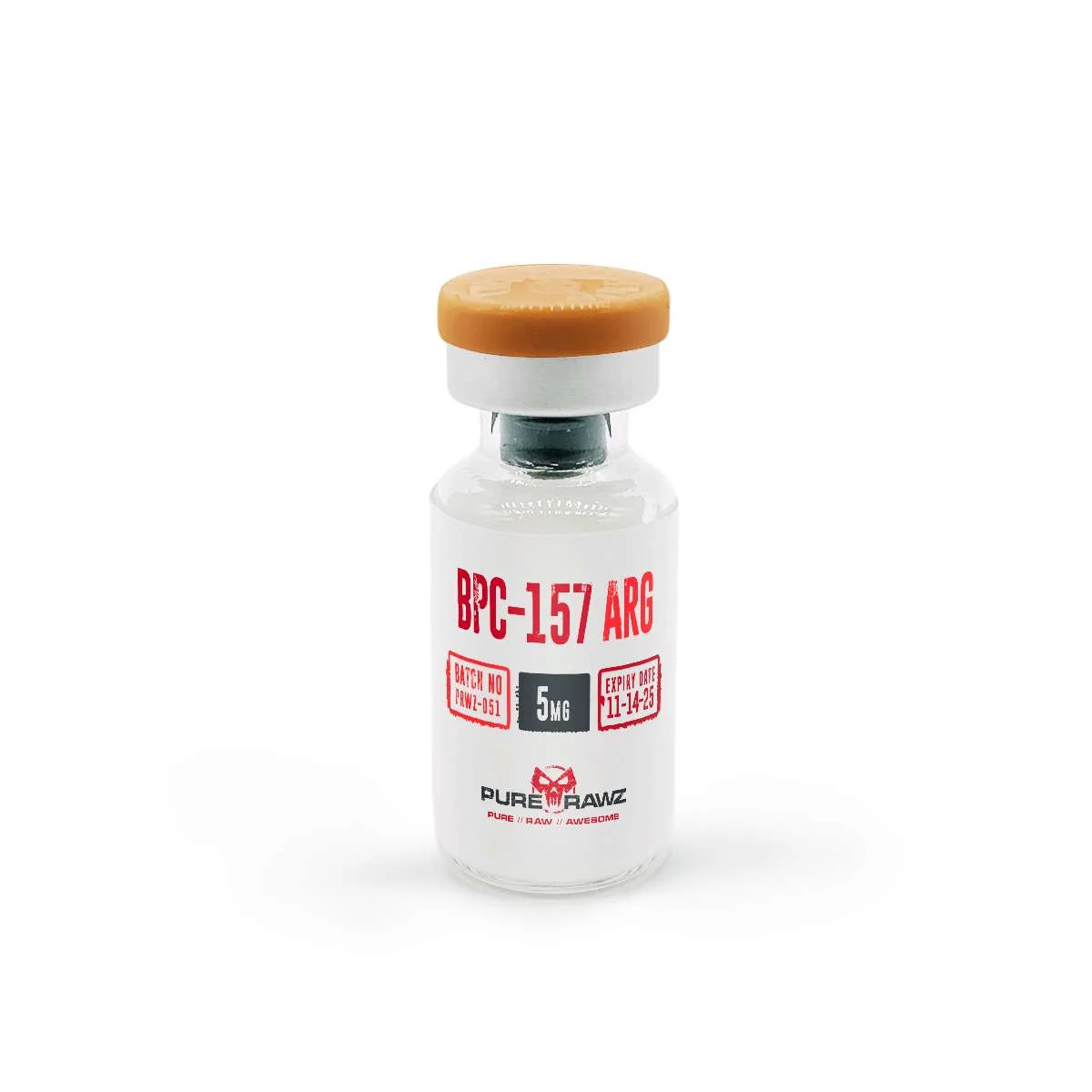
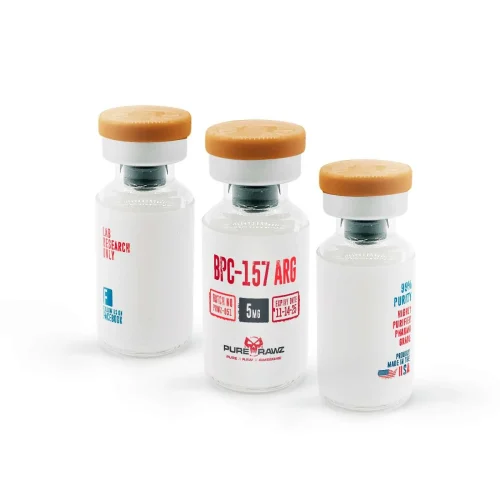
BPC-157 ARG
Price range: $82.06 through $153.21
Buy BPC-157 — Lab-Verified, 99% Pure Research Peptide
Researchers looking to buy BPC-157 with documented purity credentials will find PureRawz sets the standard for quality assurance in the research peptide supply industry. Our BPC-157 (Body Protection Compound-157) is a synthetic, lyophilized pentadecapeptide produced under rigorous laboratory controls, verified by independent third-party testing, and shipped directly from our USA-based facility. Every order is backed by a Certificate of Analysis (COA) covering both purity grade and endotoxin load — dual documentation that serious research programs require.
BPC-157 Product Specifications
- Sequence: Gly-Glu-Pro-Pro-Pro-Gly-Lys-Pro-Ala-Asp-Asp-Ala-Gly-Leu-Val (15 amino acids)
- Molecular Formula: C₆₂H₉₈N₁₆O₂₂
- Molecular Weight: 1419.53 g/mol
- CAS Number: 137525-51-0
- Purity: ≥99% (HPLC verified)
- Verification Method: HPLC + Mass Spectrometry
- Endotoxin Testing: LAL method — COA provided per batch
- Form: Lyophilized powder
- Available Size: 10mg per vial
- Storage: −20°C (long-term); 4°C (short-term, up to 4 weeks)
- Lot Number: Unique per batch — traceable to COA
- Shipping: Fast USA shipping — processed within 1 business day
COA Documentation — Dual Certification Standard
Every batch of BPC-157 supplied by PureRawz is independently verified by a certified third-party laboratory. Unlike sources that provide a single purity report, we issue two separate Certificates of Analysis:
- Purity COA — Confirms ≥99% peptide purity via HPLC and mass spectrometry analysis. Lot-number matched to your specific batch.
- Endotoxin COA — LAL assay results confirming endotoxin levels within research-acceptable limits. Critical for any in-vivo preclinical study.
Each COA is linked to a unique lot number printed on your vial, so researchers can verify the exact batch tested. This level of documentation traceability is the benchmark serious laboratory procurement officers require — and what PureRawz delivers as standard practice, not an exception.
Why Buy BPC-157 from PureRawz — A Source Comparison
Not all research peptide suppliers operate to the same documentation and quality standard. The table below outlines where PureRawz differentiates from common industry practice:
| Quality Factor | PureRawz | Typical Competitor |
|---|---|---|
| Purity Grade | ≥99% HPLC verified | 98% or unspecified |
| COA Type | Dual: Purity + Endotoxin | Purity only (single) |
| Lot Number Traceability | ✓ Every vial, every batch | Often generic / undated |
| Testing Laboratory | Independent third-party | In-house or unverified |
| Shipping Origin | USA — 1 business day processing | International / variable |
| Verification Method | HPLC + Mass Spectrometry | HPLC only |
How to Reconstitute BPC-157 — Researcher's Protocol Guide
Proper reconstitution is essential for maintaining peptide integrity during research preparation. The following protocol is provided as general laboratory reference information for researchers working with lyophilized peptides.
Materials Required for Reconstitution
- BPC-157 lyophilized vial (lab-verified, from sealed storage)
- Bacteriostatic water (0.9% benzyl alcohol) — preferred for multi-use vials
- Sterile water for injection — for single-use preparation
- 1mL or 3mL sterile syringe with 25–27 gauge needle
- Alcohol swabs (70% isopropyl)
- Cold storage (2–8°C) for post-reconstitution
Step-by-Step Reconstitution Procedure
- Inspect the vial: Confirm the lyophilized cake is intact, white to off-white in appearance. Verify the lot number matches your COA documentation before beginning.
- Swab the septum: Clean the rubber stopper with a 70% isopropyl alcohol swab. Allow to air-dry for 10–15 seconds.
- Prepare the solvent: Draw your chosen reconstitution solvent (bacteriostatic water is standard for research use). For a 10mg vial, 2mL of solvent yields a 5mg/mL concentration; 1mL yields 10mg/mL.
- Inject slowly: Insert the needle at an angle and direct the solvent stream against the inner glass wall — never directly onto the lyophilized cake, as this degrades peptide structure.
- Allow passive dissolution: Do not shake. Allow the vial to sit at room temperature for 3–5 minutes. Gently swirl if needed. The solution should appear clear and colourless.
- Inspect before use: Discard any solution that appears cloudy, particulate, or discoloured — this may indicate contamination or degradation.
- Label and store: Label the vial with date of reconstitution. Store at 2–8°C. Bacteriostatic water preparations remain stable for up to 28 days refrigerated. Use sterile water preparations within 24 hours.
Note: All reconstitution and handling procedures should be performed in accordance with your institution's standard operating procedures for peptide research compounds.
BPC-157 Dosing Protocols in Preclinical Research
Important: The following information is drawn from published preclinical and in-vitro research literature. It is provided strictly for scientific reference purposes. PureRawz does not provide medical advice, and this information should not be interpreted as a recommendation for any human use.
Dosing Ranges Observed in Published Research
Peer-reviewed preclinical studies involving BPC-157 have reported the following dosage parameters in animal model research:
- Low-dose range: 1–2 µg/kg body weight (rodent models)
- Standard research range: 10 µg/kg body weight
- High-dose range: 100–200 µg/kg body weight (reported in select studies)
- Administration routes studied: Intraperitoneal (IP), intragastric, subcutaneous, and topical application in wound model studies
- Study durations: 7–30 day protocols most commonly reported in literature
Research Formulation Considerations
- BPC-157 is a pentadecapeptide — 15 amino acids — that is stable in acidic environments according to published synthesis data
- Lyophilized form offers superior shelf stability vs. liquid preparations for long-term laboratory inventory
- Mass spectrometry confirmation of molecular integrity is recommended before initiating any in-vivo study protocol
- Endotoxin testing (LAL assay) is considered best practice for any preparation intended for in-vivo administration in preclinical research models
Related Research Peptides
Researchers studying BPC-157 frequently investigate related peptides as part of multi-compound preclinical protocols. PureRawz supplies the following lab-verified, third-party tested compounds:
- TB-500 (Thymosin Beta-4) — A 43-amino acid peptide studied in preclinical models alongside BPC-157 in tissue repair research contexts. Available in 5mg and 10mg lyophilized vials with COA.
- CJC-1295 — A GHRH analogue peptide studied for its interactions with growth hormone axis signalling in laboratory research. Third-party tested, 99% purity guaranteed.
- Ipamorelin — A selective growth hormone secretagogue pentapeptide frequently investigated alongside GHRH analogues in preclinical GH research protocols. Lab-verified with full COA.
Frequently Asked Questions — BPC-157 Research Peptide
1. What is the purity level of PureRawz BPC-157?
Our BPC-157 is certified at ≥99% purity, verified by independent third-party HPLC and mass spectrometry analysis. Each batch is tested separately, and purity results are documented in a lot-specific Certificate of Analysis available for download with every order.
2. What does the Certificate of Analysis include?
PureRawz provides two separate COA documents per batch: (1) a purity COA confirming ≥99% HPLC-verified peptide purity, and (2) an endotoxin COA from a LAL assay, confirming endotoxin load within research-acceptable parameters. Both documents are traceable to the unique lot number on your vial — a dual-documentation standard that many suppliers do not offer.
3. Is BPC-157 from PureRawz tested by an independent laboratory?
Yes. All PureRawz peptides, including BPC-157, are tested exclusively by accredited independent third-party laboratories — not in-house. This separation of supplier and tester is a fundamental trust requirement for serious research procurement and is a non-negotiable standard in our quality assurance process.
4. What does "lyophilized" mean and why does it matter?
Lyophilization (freeze-drying) removes moisture from the peptide under vacuum conditions, converting it to a stable powder form that resists degradation during storage and shipping. Lyophilized BPC-157 maintains structural integrity far longer than liquid preparations and is the industry-standard form for research-grade peptide supply. Proper storage at −20°C ensures maximum shelf life.
5. Can I buy BPC-157 10mg from PureRawz?
Yes. BPC-157 is available in 10mg lyophilized vials. This is the most commonly used quantity for research purposes, corresponding to standard preclinical protocol volumes documented in published research literature. Pricing and volume options are listed on the product page above.
6. Where does PureRawz ship BPC-157 from?
All orders are shipped from our USA-based facility. Standard processing time is 1 business day from order confirmation. USA-based shipping eliminates the extended transit times and customs complications associated with international peptide suppliers, ensuring your research timeline is not delayed.
7. How should BPC-157 be stored before and after reconstitution?
Lyophilized BPC-157 should be stored at −20°C for long-term stability, or at 2–8°C for short-term use (up to 4 weeks). After reconstitution with bacteriostatic water, the solution should be stored at 2–8°C and used within 28 days. Solutions prepared with sterile water (non-bacteriostatic) should be used within 24 hours. Avoid repeated freeze-thaw cycles, which can degrade peptide structure.
8. What solvent is recommended for reconstituting BPC-157?
Bacteriostatic water (containing 0.9% benzyl alcohol) is the standard reconstitution solvent for research use, as it preserves solution sterility for multi-use preparation over a 28-day window. Sterile saline or sterile water for injection may also be used for single-use preparations. Acetic acid solutions (0.1–1%) are sometimes referenced in peptide synthesis literature for compounds with low aqueous solubility, though BPC-157 is generally readily soluble in aqueous media.
9. What is the molecular weight and sequence of BPC-157?
BPC-157 is a synthetic pentadecapeptide with the amino acid sequence Gly-Glu-Pro-Pro-Pro-Gly-Lys-Pro-Ala-Asp-Asp-Ala-Gly-Leu-Val. Its molecular formula is C₆₂H₉₈N₁₆O₂₂ with a molecular weight of 1419.53 g/mol. CAS number: 137525-51-0. These specifications are confirmed against our COA documentation for each supplied batch.
10. How does PureRawz ensure lot-to-lot consistency?
Each production batch of BPC-157 is assigned a unique lot number that is physically printed on the vial label and cross-referenced to the batch-specific COA. This means researchers can trace their exact compound back to its verified test results — not a generic or recycled report. We do not share COA documentation between lots, and we do not use undated or non-lot-specific certificates of analysis.
BPC-157 ARG
BPC-157 ARG is a specialized peptide commonly explored for recovery studies, tissue repair, regeneration support, and advanced laboratory applications.
Browse related Purerawz peptides and trusted scientific references below.
Related Products
- Buy BPC-157 – recovery and regeneration research
- BPC-157 for Sale – trusted peptide sourcing
- Buy TB-500 – advanced repair and recovery peptide
- Buy GHK-CU – tissue and skin support studies
- Buy IGF-1 LR3 – performance and recovery research
- Buy MK-677 – growth hormone support studies
Research References
-
PubMed Research Database
– scientific studies and published research -
National Center for Biotechnology Information (NCBI)
– biomedical and research resources -
U.S. Food and Drug Administration
– regulatory and compliance reference
Additional information
| Attributes | 5mg, 10mg |
|---|
Reviews
There are no reviews yet.