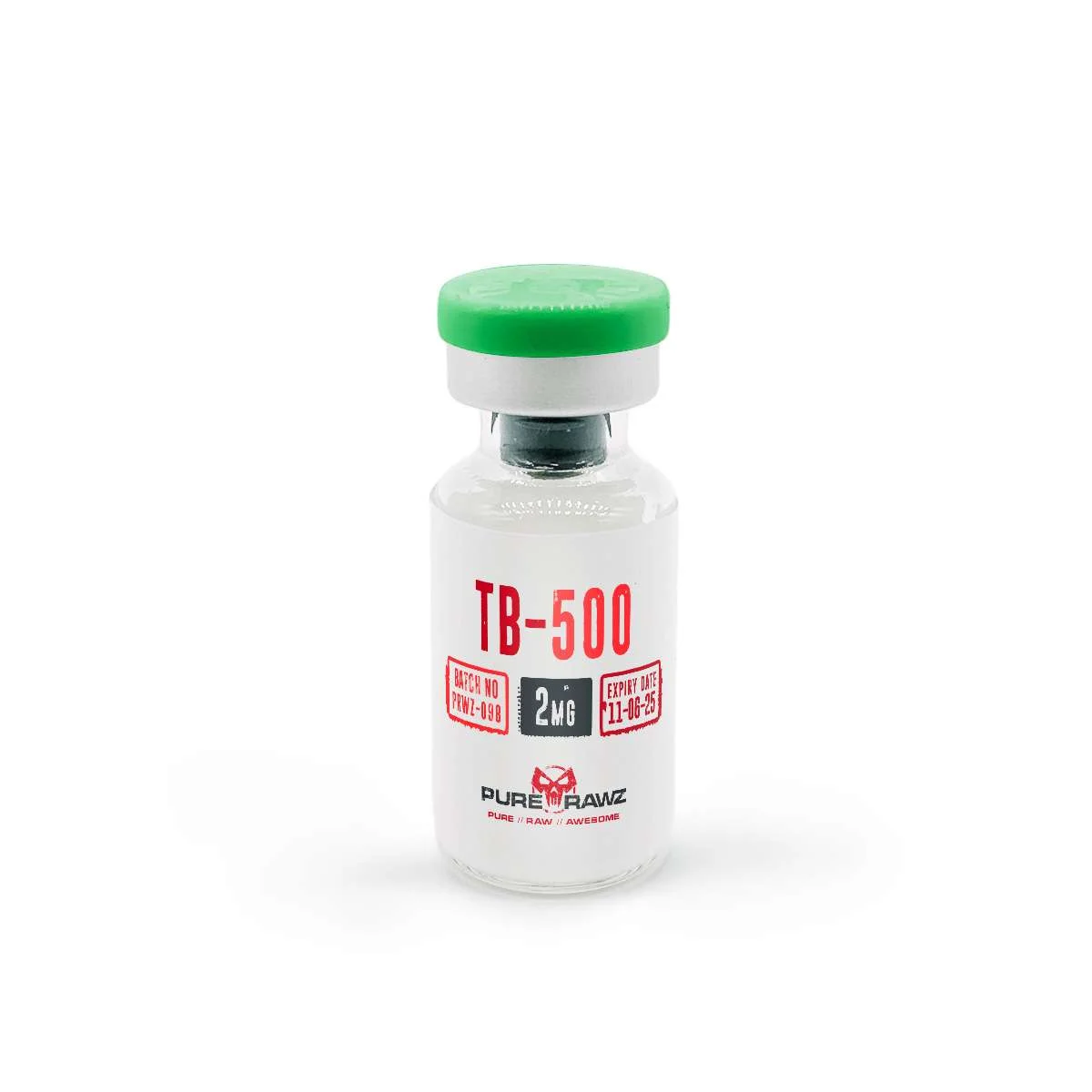
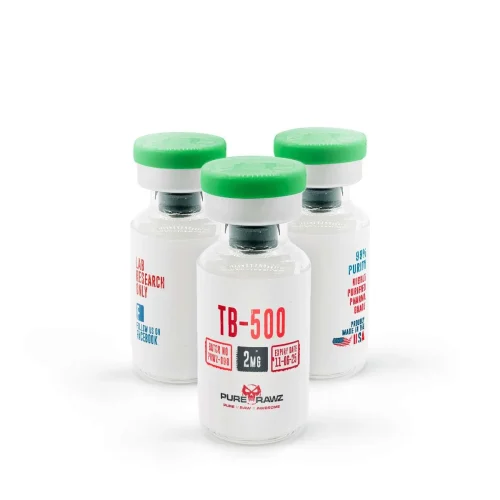
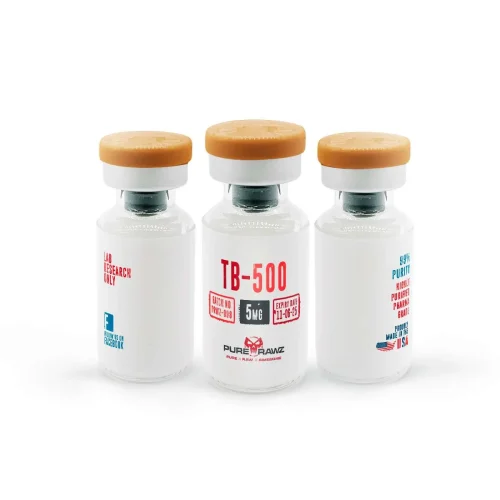
TB-500
Price range: $45.33 through $179.79
Earn 45 – 315 points upon purchasing this product.
✅ 99% Purity – Third-Party Tested
🚚 Free U.S. Shipping on Orders $100+
🇺🇸 Proudly Made in the USA
⚡ Fast & Reliable Shipping
🔒 Secure Checkout Guaranteed
Buy TB-500 — Lab-Certified Thymosin Beta-4 Research Peptide
Researchers who need to buy TB-500 with fully documented, independently verified quality credentials will find PureRawz delivers the most rigorous certification standard in the research peptide supply market. Our TB-500 (Thymosin Beta-4) is a synthetic, lyophilized 43-amino acid peptide manufactured under strict laboratory controls, tested by accredited independent third-party laboratories, and shipped directly from our USA-based processing facility. Every vial is covered by a dual Certificate of Analysis — purity and endotoxin — each document traceable to the unique lot number on your vial. This is the documentation standard that serious preclinical research programs require.
TB-500 (Thymosin Beta-4) Product Specifications
- Common Name: TB-500 / Thymosin Beta-4 / Tβ4
- Amino Acid Sequence: Ac-Ser-Asp-Lys-Pro-Asp-Met-Ala-Glu-Ile-Glu-Lys-Phe-Asp-Lys-Ser-Lys-Leu-Lys-Lys-Thr-Glu-Thr-Gln-Glu-Lys-Asn-Pro-Leu-Pro-Ser-Lys-Glu-Thr-Ile-Glu-Gln-Glu-Lys-Gln-Ala-Gly-Glu-Ser (43 amino acids)
- Active Fragment (Actin-Binding Domain): LKKTETQ (positions 17–23)
- Molecular Formula: C₂₁₂H₃₅₀N₅₆O₇₈S
- Molecular Weight: ~4,963 g/mol
- CAS Number: 77591-33-4
- Purity: ≥99% (HPLC verified)
- Verification Methods: HPLC + Mass Spectrometry
- Endotoxin Testing: LAL assay — COA issued per batch
- N-Terminal Modification: Acetylated (N-terminal acetylation)
- Form: Lyophilized powder (not reconstituted)
- Available Size: 10mg per vial
- Storage: −20°C (long-term); 2–8°C (short-term, up to 4 weeks)
- Lot Number: Unique per batch — matched to COA documentation
- Shipping Origin: USA — 1 business day processing
Dual COA Certification — The PureRawz Testing Standard
Every batch of TB-500 supplied by PureRawz is subjected to rigorous independent third-party laboratory analysis before release. We do not issue in-house certificates or reuse documentation across batches. Two separate Certificates of Analysis accompany every production lot:
- Purity COA — HPLC and mass spectrometry analysis confirming ≥99% peptide purity. Identifies the molecular identity, sequence integrity, and active peptide content. Lot-number matched to your specific vial.
- Endotoxin COA — LAL (Limulus Amebocyte Lysate) assay results documenting endotoxin (LPS) load per batch. Critical documentation for any in-vivo preclinical research protocol where endotoxin contamination could confound experimental outcomes.
Each COA is permanently tied to the lot number printed on the vial label. Researchers can cross-reference the vial they receive against the exact batch tested — no generic, undated, or recycled lab reports. This traceability standard is non-negotiable at PureRawz.
TB-500 vs Thymosin Beta-4 — What Researchers Need to Know
These two terms are frequently used interchangeably in research literature, but they represent distinct molecular entities. Understanding the difference is essential for accurate experimental design and result interpretation.
Full-Length Thymosin Beta-4 (Tβ4)
- Structure: 43-amino acid endogenous peptide encoded by the TMSB4X gene
- Molecular Weight: ~4,963 g/mol
- Origin: Endogenous — produced in nearly all mammalian cells, with highest concentrations in platelets, white blood cells, and wound fluid
- Primary Role: Major G-actin sequestering molecule in eukaryotic cells; regulates actin polymerization dynamics central to cell migration, morphology, and cytoskeletal remodeling
- Research Note: The full-length molecule carries multiple functional domains beyond the actin-binding fragment, including regions studied for angiogenic and immune-modulatory signaling
TB-500 (Synthetic Thymosin Beta-4)
- Structure: Synthetic peptide replicating the full 43-amino acid Thymosin Beta-4 sequence with N-terminal acetylation
- Active Actin-Binding Fragment: LKKTETQ (amino acids 17–23) — the sequence responsible for primary actin-sequestering activity in laboratory models
- Research Advantage: Chemically synthesized TB-500 offers batch-to-batch consistency, precise purity control via HPLC, and documented lot traceability — parameters that endogenous-derived peptides cannot guarantee
- Important Distinction: Researchers should not conflate TB-500 with the shorter heptapeptide fragment Ac-LKKTETQ (sometimes sold as "TB-500 Frag 17-23"), which represents only the isolated actin-binding motif and lacks the broader domain structure of the full 43-amino acid sequence
Why Buy TB-500 from PureRawz — Source Quality Comparison
The research peptide market in 2026 contains suppliers operating across a wide range of documentation standards and quality controls. The following comparison reflects where PureRawz positions relative to typical industry practice:
| Quality Factor | PureRawz | Typical Competitor |
|---|---|---|
| Purity Grade | ≥99% HPLC + MS verified | ≥98% or unspecified |
| COA Documentation | Dual: Purity + Endotoxin | Purity only (single document) |
| Lot Number Traceability | ✓ Every vial — every batch | Generic / undated in many cases |
| Testing Laboratory | Accredited independent third-party | In-house or unverified source |
| Verification Method | HPLC + Mass Spectrometry | HPLC only |
| Shipping Origin | USA — 1 business day processing | Variable / international risk |
| COA Per-Batch Policy | New COA for every production lot | Shared or outdated reports common |
How to Reconstitute TB-500 — Laboratory Reference Protocol
Correct reconstitution technique preserves peptide structural integrity and ensures reliable, reproducible research outcomes. The following procedure is provided as a general laboratory reference for researchers working with lyophilized TB-500 (Thymosin Beta-4). All protocols should be adapted to your institution's standard operating procedures.
Required Materials
- TB-500 lyophilized vial (≥99% purity, lab-verified — from sealed cold storage)
- Bacteriostatic water (0.9% benzyl alcohol) — preferred solvent for multi-use preparations
- Sterile water for injection — for single-use preparations only
- 1mL or 3mL sterile syringe with 25–27 gauge needle
- 70% isopropyl alcohol swabs
- Refrigerated storage (2–8°C) ready for post-reconstitution
- Sterile laminar flow hood or clean workspace
Step-by-Step Reconstitution Procedure for TB-500
- Verify your vial: Confirm the lot number on the vial label matches your COA documentation before proceeding. The lyophilized cake should appear white to off-white and intact. Discard any vial where the cake appears discoloured, wet, or fragmented.
- Swab the septum: Clean the rubber stopper with a 70% isopropyl alcohol swab. Allow 10–15 seconds to air-dry completely before inserting any needle.
- Calculate your concentration: Determine the desired working concentration before drawing solvent.
- 10mg vial + 1mL bacteriostatic water = 10mg/mL (10,000 mcg/mL)
- 10mg vial + 2mL bacteriostatic water = 5mg/mL (5,000 mcg/mL)
- 10mg vial + 5mL bacteriostatic water = 2mg/mL (2,000 mcg/mL)
- Draw and inject solvent slowly: Angle the needle and direct the solvent stream against the inner glass wall of the vial — never aim directly at the lyophilized cake. High-velocity direct injection degrades peptide structure and reduces purity integrity of your solution.
- Allow passive dissolution: Do not shake or vortex. Allow the vial to sit undisturbed at room temperature for 3–5 minutes. Gently swirl if required. A correctly reconstituted TB-500 solution will appear clear and colourless.
- Inspect before use: Any solution that appears cloudy, particulate, or discoloured should be discarded. These are indicators of contamination, degradation, or improper reconstitution.
- Label and refrigerate immediately: Mark the vial with the reconstitution date and lot number. Store at 2–8°C.
- Bacteriostatic water solutions: stable for up to 28 days refrigerated
- Sterile water solutions: use within 24 hours
Important: Avoid repeated freeze-thaw cycles with reconstituted peptide solutions. Thermal cycling degrades peptide structure and reduces analytical consistency in downstream assays.
TB-500 Dosing Protocols in Preclinical Research
Disclaimer: The following information is derived exclusively from published preclinical and in-vitro research literature. It is presented for scientific reference purposes only. PureRawz does not provide medical advice, dosage guidance for human use, or therapeutic recommendations of any kind. This section is intended for qualified researchers designing laboratory research protocols.
Published Preclinical Dosage Parameters
Peer-reviewed studies investigating TB-500 (Thymosin Beta-4) in animal model systems have reported the following dosage parameters:
- Low-dose range: 0.2–1 mg/kg body weight (rodent models — referenced in wound healing studies)
- Standard research range: 1.5–6 mg/kg body weight (most commonly cited range across published murine studies)
- Loading-phase protocols: Some published studies reference an initial higher-dose loading period (weeks 1–4) followed by a reduced maintenance frequency
- Administration routes studied: Intraperitoneal (IP), subcutaneous (SC), and intravenous (IV) in preclinical model literature; topical application referenced in wound model studies
- Study durations: 2–12 week protocols most frequently reported; cardiovascular and cardiac regeneration studies often extend to 30 days post-injury
Research Formulation Considerations for TB-500
- TB-500 is a large peptide at ~4,963 g/mol — significantly larger than BPC-157 (1,419 g/mol) — and dissolves readily in aqueous bacteriostatic water without the acidic co-solvents sometimes required for smaller peptides
- N-terminal acetylation of the synthesized compound is essential for biological activity in actin-binding assays; researchers should confirm N-terminal modification is documented in their COA
- Mass spectrometry identity confirmation is strongly recommended before any in-vivo protocol to verify full 43-amino acid sequence integrity and rule out truncated or degraded variants
- For in-vivo endotoxin sensitivity models, LAL assay documentation (endotoxin COA) is critical — endotoxin contamination at sub-threshold levels can significantly confound inflammatory and tissue repair outcome measures
- Lyophilized TB-500 maintains structural stability for up to 24 months at −20°C; solution stability post-reconstitution is markedly shorter and time-sensitive
Related Research Peptides — Frequently Studied Alongside TB-500
Preclinical research programs investigating TB-500 frequently incorporate related peptides in multi-compound protocols. All PureRawz peptides are independently third-party tested, lot-verified, and ship from our USA facility:
- BPC-157 (Body Protection Compound-157) — A synthetic pentadecapeptide (15 amino acids, 1,419 g/mol) frequently studied in conjunction with TB-500 in preclinical tissue repair models. Available as a 10mg lyophilized vial with dual purity and endotoxin COA. One of the most commonly co-researched peptides in the current preclinical literature.
- CJC-1295 (GHRH Analogue) — A growth hormone-releasing hormone analogue studied for interactions with the GH/IGF-1 axis in preclinical models. Third-party tested to ≥99% purity with full COA documentation. Available in lyophilized vials with fast USA shipping.
- Ipamorelin — A selective pentapeptide growth hormone secretagogue studied in GH release and metabolic research contexts. Lab-verified, ≥99% pure, endotoxin tested. Frequently investigated in combination protocols alongside GHRH analogues in published preclinical literature.
- BPC-157 / TB-500 Research Blend — A pre-combined lyophilized formulation of both BPC-157 and TB-500 for researchers investigating dual-peptide protocols in a single preparation. Independently tested with dual COA. Available in 10mg/10mg configuration.
Frequently Asked Questions — TB-500 Research Peptide
1. What purity level does PureRawz guarantee for TB-500?
PureRawz TB-500 is certified at ≥99% purity via independent third-party HPLC and mass spectrometry analysis. This is a per-batch specification — not a product-line average — confirmed by a unique lot-specific Certificate of Analysis issued for every production run. Researchers receive documentation tied to the exact batch they purchase, not a shared or undated report.
2. What is the difference between TB-500 and Thymosin Beta-4?
Thymosin Beta-4 (Tβ4) is a 43-amino acid endogenous peptide naturally produced in mammalian cells. TB-500 is a synthetic research peptide that replicates the full Thymosin Beta-4 amino acid sequence with N-terminal acetylation. The terms are often used interchangeably in secondary research literature, though they technically refer to the same 43-amino acid structure — as opposed to TB-500 "Frag 17-23" (Ac-LKKTETQ), which is a shorter 7-amino acid fragment of the active actin-binding domain only.
3. Does PureRawz provide endotoxin testing for TB-500?
Yes. Every batch of TB-500 from PureRawz is accompanied by an endotoxin Certificate of Analysis generated via LAL (Limulus Amebocyte Lysate) assay by an accredited independent laboratory. Endotoxin documentation is essential for any in-vivo preclinical research where LPS contamination could confound inflammatory signalling or tissue repair outcome measures. This dual COA standard — purity plus endotoxin — differentiates PureRawz from suppliers that provide only a single purity report.
4. What solvent should I use to reconstitute TB-500 for research?
Bacteriostatic water (0.9% benzyl alcohol) is the standard recommended solvent for TB-500 reconstitution in research settings. It preserves solution sterility and extends usable shelf life to approximately 28 days when refrigerated at 2–8°C. Sterile water for injection may be used for single-use preparations but must be used within 24 hours. TB-500 dissolves readily in aqueous media due to its hydrophilic nature and does not typically require acidic co-solvents.
5. Can I buy TB-500 in 10mg vials from PureRawz?
Yes. TB-500 is available from PureRawz in 10mg lyophilized vials — the most commonly referenced vial size in published preclinical TB-500 research. Each vial is sealed, labelled with a unique lot number, and accompanied by both a purity and endotoxin Certificate of Analysis. All orders ship from the USA with 1 business day processing time.
6. How does PureRawz ensure lot-to-lot consistency for TB-500?
Each production batch of TB-500 is assigned a unique lot number that appears on the vial label and is cross-referenced in the batch-specific COA. PureRawz does not issue blanket or recycled certificates — each lot undergoes its own independent third-party HPLC, mass spectrometry, and LAL endotoxin analysis before release. This means researchers can verify the actual test results for the precise batch they received, supporting research reproducibility and experimental chain-of-custody documentation.
7. Where does PureRawz ship TB-500 from, and how long does shipping take?
All TB-500 orders are processed and shipped from our USA-based facility. Standard processing time is 1 business day from confirmed order. USA-origin shipping eliminates the unpredictable customs delays, cold-chain integrity risks, and extended transit windows associated with international suppliers — ensuring your research compound arrives within a reliable, trackable timeframe in optimal lyophilized condition.
8. How should TB-500 be stored before and after reconstitution?
Lyophilized TB-500 should be stored at −20°C for long-term stability (up to 24 months) or at 2–8°C for short-term use. After reconstitution with bacteriostatic water, the solution should be stored at 2–8°C and used within 28 days. Never freeze reconstituted peptide solution — repeated freeze-thaw cycles degrade the peptide and compromise analytical consistency. Always verify the reconstitution date label before use.
9. What is the molecular weight of TB-500 and why does it matter for research?
TB-500 (full-length Thymosin Beta-4) has a molecular weight of approximately 4,963 g/mol and a molecular formula of C₂₁₂H₃₅₀N₅₆O₇₈S. This is substantially larger than shorter research peptides such as BPC-157 (1,419 g/mol). Molecular weight is a critical identity parameter — mass spectrometry confirmation of the correct molecular weight in your COA confirms that the full 43-amino acid sequence is intact and that you are not receiving a truncated fragment or degraded variant. Always verify the MW in your COA before initiating any research protocol.
10. Is TB-500 legal to buy for research purposes in the USA?
TB-500 is legal to purchase for legitimate laboratory and preclinical research purposes in the United States. It is not approved by the FDA for human therapeutic use and may not be used for human or veterinary administration. TB-500 is listed on the WADA Prohibited Substances list and is classified by the FDA as a bulk drug substance. PureRawz sells TB-500 exclusively to qualified researchers and institutions for lawful research applications. Buyers are responsible for compliance with all applicable local, state, and federal regulations governing research compound use and handling.
TB-500
TB-500 is a highly researched peptide commonly explored for recovery studies, tissue repair, regeneration support, and advanced laboratory applications.
Browse related Purerawz peptides and trusted scientific references below.
Related Products
- Buy TB-500 – advanced repair and recovery peptide
- Buy BPC-157 – recovery and regeneration research
- BPC-157 for Sale – trusted peptide sourcing
- Buy GHK-CU – tissue and skin support studies
- Buy IGF-1 LR3 – performance and growth research
- Buy MK-677 – growth hormone support studies
Research References
-
PubMed Research Database
– scientific studies and published research -
National Center for Biotechnology Information (NCBI)
– biomedical and research resources -
U.S. Food and Drug Administration
– regulatory and compliance reference
Additional information
| Attributes | 2mg, 5mg, 10mg |
|---|
Reviews
There are no reviews yet.